Which celebs live in Wimbledon?
Darcey Bussell, Marcus Mumford, Oliver Reed, Martin Clunes and James Hunt all have documented connections to Wimbledon. But those connections are not interchangeable: one person may have been reported as a resident, another grew up here, and others belong to the area's history. If you are asking which celebrities live in Wimbledon today, the honest answer needs more care than a familiar list of famous names.
For example, Metro reported in June 2021 that Darcey Bussell lived in Wimbledon. Music biography publisher AllMusic records that Marcus Mumford was raised in Wimbledon Chase. Neither statement, by itself, establishes where somebody lives in October 2026. This article distinguishes dated residential reporting, childhood connections and former residents, without publishing private addresses or suggesting where to find people.
The result is still an enjoyable story. Wimbledon has links with ballet, music, cinema, television, art criticism and motor racing, alongside its international tennis identity. Those associations add interest to the neighbourhood, while its everyday appeal comes from something more lasting: green space, local character, cultural venues and connections across London.
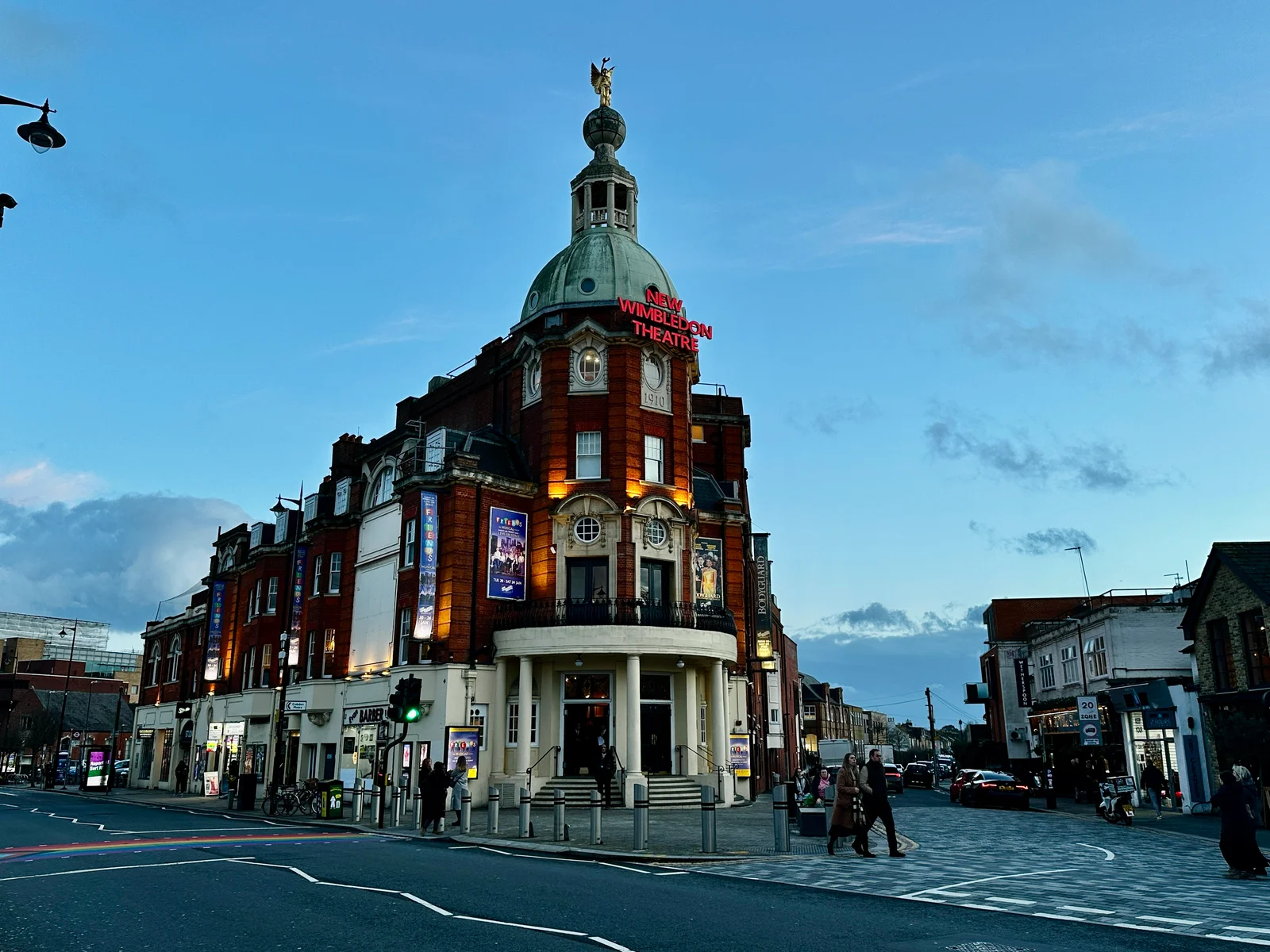
Hero photograph: New Wimbledon Theatre at twilight, January 2026, by Matt Brown, CC BY 4.0; resized and converted to WebP. Photograph credits and licences. Public-event photographs below do not imply endorsement of this agency or confirm current residence.
Darcey Bussell: a publicly reported Wimbledon connection
Dame Darcey Bussell is one of the clearest names to include, provided the reporting is dated accurately. The former Royal Ballet principal and former Strictly Come Dancing judge appeared in Metro's Wimbledon property feature of 29 June 2021, which described her as living locally. That is a published residential connection, not an independently verified statement about her present home.
There is also a separate, public community connection. In June 2015, the Wimbledon Guardian reported that Bussell would open Wimbledon Village Fair. The report described a family event supporting Wimbledon Guild, with stalls, entertainment and activities. It places a recognised performer within a local community occasion rather than relying on an anonymous sighting or a rumoured property purchase.
That distinction matters. A positive story about an artist taking part in a local event says something meaningful about Wimbledon's cultural life. It does not give readers permission to identify a house, wait outside it or assume that an old newspaper description remains current. Her professional achievements and documented local ties are enough to make the connection interesting.

Marcus Mumford: growing up in Wimbledon Chase
Marcus Mumford's connection is a childhood and education story. AllMusic's biography records that the Mumford & Sons frontman was born in California and raised in Wimbledon Chase, attending King's College School. It also describes his later musical career and the band's international success. This gives Wimbledon a genuine link with a musician whose work reached a worldwide audience.
It is important not to turn that biography into a claim that Mumford currently lives in the same neighbourhood. Growing up somewhere is a lasting part of a person's story, but it is not a current residential record. Nor does a connection to a school establish where an adult or their family now lives.
For readers interested in the area, the Wimbledon Chase detail is useful in another way. It reminds us that Wimbledon's identity extends beyond the Village and Centre Court. Residential neighbourhoods, local shops and everyday journeys are part of its cultural history too. The area's famous connections are spread across different kinds of Wimbledon life, not confined to one prestigious label.

Oliver Reed: a Wimbledon-born film star
Oliver Reed belongs firmly in the historical section. The Guardian's obituary of 3 May 1999 records that he was born in Wimbledon. His film career included Oliver!, The Three Musketeers and work with director Ken Russell, giving the area a connection with a distinctive figure in British cinema.
Because Reed died in 1999, he should never appear in a list presented simply as celebrities who live in Wimbledon today. The accurate description is a Wimbledon-born actor with a substantial screen legacy. That wording respects the historical record while avoiding the misleading present tense that can creep into recycled lifestyle articles.
A birthplace connection is worth celebrating without embellishment. It does not need a supposed favourite table, a private-home photograph or an unverified anecdote to become interesting. For film enthusiasts, the link is an invitation to revisit the performances, not to treat present-day residential streets as a celebrity trail.
Martin Clunes: another notable Wimbledon birthplace
Martin Clunes is another familiar actor whose biography connects him with Wimbledon. Apple TV's career profile records his Wimbledon birth and traces his work in theatre and television. Audiences know him particularly through Men Behaving Badly and Doc Martin, two very different programmes that helped establish his broad popular appeal.
Here, too, birthplace and current residence must remain separate. A biographical entry establishes the former, not the latter. Readers should not interpret a Wimbledon birth as evidence that Clunes maintains a local home, or assume that a television character's setting describes an actor's own life.
Taken alongside Reed's story, the connection adds another layer to Wimbledon's performing-arts identity. The area is more than the location of a sporting event: it has contributed names to British screen culture across different generations. That is a stronger and more accurate story than stretching a list to suggest every familiar face is a current neighbour.
James Hunt: a former resident beyond the tennis world
James Hunt gives Wimbledon a sporting connection that has nothing to do with a tennis racket. The 1976 Formula One world champion later became a familiar television commentator alongside Murray Walker. His personality and racing achievements remain part of British sporting history.
A Wimbledon Society heritage article, published by the Wimbledon Guardian in June 2013, records that Hunt moved to Wimbledon in 1982 and lived there until his death in 1993. It also recalls his enjoyment of walking dogs on the Common. Those are historical details, not claims about a living person's current movements.
For a positive account of the sporting career behind the local connection, Formula 1's official tribute to James Hunt explains why the champion remains such a memorable figure. It is an authoritative sporting source, while the Wimbledon Society supplies the local residential history.
Hunt's story also illustrates why Wimbledon appeals beyond one profession. Its landscape and London setting can form part of a home life quite separate from somebody's public career. There is no need to identify the property to appreciate that connection.
Brian Sewell: a connection with the art world
Art critic Brian Sewell offers another historical association. Metro's June 2021 property feature discussed the redevelopment of his former Wimbledon home. The relevant point here is the publicly reported former-resident connection, not the individual property's location, layout or occupants.
Including art criticism alongside music, ballet, acting and motor racing gives a fuller picture of the area. Wimbledon has accumulated associations across the arts and public life over time. It is more accurate to describe that as a varied cultural history than as evidence of a fixed celebrity community whose membership never changes.
It also helps to separate a person's reputation from a property's value. A famous former owner can provide an interesting footnote, but does not replace an assessment of condition, tenure, location and comparable sales.
Do tennis celebrities live here, or just visit?
The Championships bring internationally recognised players, broadcasters and guests to Wimbledon. A photograph at the All England Club, attendance in a hospitality area or a temporary stay during the tournament is not evidence of permanent residence. That is particularly important in a place whose name is broadcast worldwide every summer.
Sportspeople may own, rent or stay in different locations for different reasons. Unless a reliable public source establishes the nature and date of a residential connection, it is better not to turn an appearance into a housing claim. The same applies to actors photographed attending a final.
Wimbledon's tennis association is a genuine source of local pride. It simply should not be used as a shortcut for compiling a supposedly current list of famous residents. Visiting a tournament and making a neighbourhood your home are different things.
Why does Wimbledon have such lasting appeal?
The interesting question for a homebuyer is not how many famous people might live nearby, but what makes the area enjoyable in its own right. Wimbledon combines substantial green space, a recognisable Village high street, a busy town centre and residential neighbourhoods with different characters.
The Common and local parks give residents opportunities to spend time outdoors, while transport options connect parts of the area with the wider city. That balance can appeal to people with demanding professional lives as well as households simply wanting a comfortable weekly routine. It would be speculation, however, to assign those motives to any particular celebrity without their own account.
If you are comparing locations, our guide to the best areas to live in Wimbledon considers the Village, Wimbledon Park, central Wimbledon, Wimbledon Chase and South Wimbledon. The right neighbourhood depends on your priorities, not on a famous name associated with it.
Culture you can enjoy without looking for private homes
Wimbledon's public cultural life is a better starting point than celebrity spotting. New Wimbledon Theatre, pictured above, is a visible part of the town centre's identity. Theatre visits, local events and the area's heritage offer ways to enjoy its connection with entertainment without intruding on anybody's home life.
There is also a practical distinction between public performance and private residence. A publicly advertised event invites an audience; a person's front door does not. Following official programmes and buying tickets supports the cultural life that makes a neighbourhood interesting, rather than relying on rumours about who might be nearby.
For residents, that combination of public activity and ordinary privacy is valuable. A place can have a recognisable cultural identity while still allowing people to shop, walk and live without becoming an attraction themselves.
What should buyers take from the celebrity connection?
Celebrity associations can make an area memorable, but should sit well below the essentials in a buying decision. Check your budget, transport needs, ownership costs and the suitability of the home. A famous former resident does not guarantee capital growth, and a recognisable postcode does not remove the need for a survey or legal checks.
Our guide to buying a home in Wimbledon looks at the broader advantages and trade-offs. The most useful test is whether a particular property supports your daily life comfortably, including the costs of maintaining it.
The same principle applies to choosing between neighbourhoods. A convenient station, usable garden or manageable service charge may have a much greater impact on your experience than any connection with a public figure.
The answer: famous connections, with the dates kept clear
Darcey Bussell has a published residential connection dated 2021; Marcus Mumford has a documented Wimbledon Chase upbringing; Martin Clunes and Oliver Reed were born in Wimbledon; James Hunt was a former resident; and Brian Sewell has a publicly reported former-home association. These are different kinds of evidence, not a verified roll call of current residents.
What they collectively reveal is a neighbourhood with interests extending well beyond tennis. Wimbledon offers a setting with sporting history, creative connections and an appealing everyday life. That is worth exploring on its own terms, with respect for the privacy of everyone who calls the area home.
Research note: Sources consulted include Metro (29 June 2021), the Wimbledon Guardian (6 June 2015), AllMusic's Marcus Mumford biography, Apple TV's Martin Clunes profile, the Guardian's Oliver Reed obituary (3 May 1999), the Wimbledon Society's James Hunt heritage feature (14 June 2013), and Formula 1's official tribute (15 June 2018). Historical reporting is not confirmation of current residence.
For advice about finding your own place in the area, speak to your wimbledon estate agent.
Share this article