
Game, Set, Home: What the 2026 Championships Meant for Life in SW19
For two weeks each summer, Wimbledon becomes the centre of the sporting world. The familiar streets fill with visitors, the grass courts take their place on television screens across the globe, and even people who do not follow tennis find themselves checking the scores. The 139th Championships, held from 29 June to 12 July 2026, gave SW19 another memorable fortnight. Yet the question for somebody thinking about making a home here is more interesting than who won a particular match: what is it actually like to live in a place that the world comes to visit?
The answer is about much more than a postcode near Centre Court. The tournament is a spectacular annual chapter, but the book is written across ordinary mornings in Wimbledon Village, walks on the Common, journeys from the station and evenings spent in neighbourhood cafés. Now that the crowds have gone and autumn has arrived, prospective buyers can see that quieter version of SW19 for themselves. If a move before next summer appeals, this is a good moment to begin learning the streets rather than waiting for the next tennis headlines.
A fortnight worth remembering
Wimbledon 2026 ran for 14 days, beginning on Monday 29 June and ending on Sunday 12 July. In its post-tournament account, the All England Club reported a record 550,151 people through the gates over the fortnight. It also described the first rain-free Championships since 2019. Those are measures of the event's scale, not statistics about the property market, but they help explain why the tournament is such a vivid part of local life.
There were human stories alongside the numbers. Jannik Sinner won the gentlemen's singles title and Linda Noskova won the ladies' singles title. Noskova's final against Karolína Muchová was especially dramatic: after letting five championship points slip away, she regrouped to win in three sets. The BBC's account of Linda Noskova's Wimbledon triumph captures that combination of resilience and joy. The result will live in tennis history; for locals, such moments are also part of the summer atmosphere on their doorstep.

Centre Court is a landmark, not a whole neighbourhood
The All England Lawn Tennis Club gives Wimbledon an identity recognised far beyond London. Living close to its Church Road grounds can mean seeing the preparations, visitors and celebratory energy at close quarters. But proximity alone does not describe a home. A property's outlook, road position, layout, garden, station route and access to everyday shops may matter far more to the person who lives there for the other 50 weeks of the year.
It is also worth looking at a map carefully. “Near Wimbledon tennis” can mean different things: a walk from Wimbledon Park, a route through the Village, or an address towards Southfields. Each has a different feel and transport pattern. Buyers should walk the actual route rather than relying on an agent's broad neighbourhood label. The right home is one that works equally well on a dark weekday in February and a sunny finals weekend in July.
What Wimbledon feels like during the Championships
Tournament time changes the rhythm of SW19. Visitors arrive by rail and Underground, hospitality venues become busier, and streets approaching the grounds can feel unusually lively. For some residents that is a delight: the sense of occasion, shared conversations about a five-set match and the chance to show friends a local event with a worldwide audience. Others plan a quieter route home or schedule errands away from the busiest times. Both responses are normal.
That balance matters when house-hunting. A viewing in September shows the normal street pattern, not the temporary July one. If a property is close to the grounds, ask residents about pedestrian flow, event-day traffic and parking arrangements. Look at local signs and any current council notices before the next tournament. A short-lived annual change is not necessarily a drawback, but it is better understood before buying than discovered afterwards.
Wimbledon Village beyond the fortnight
The Village is a natural starting point for people drawn by the tennis. Its high street, independent businesses and access to the Common provide a social centre that continues long after the courts have been cleared. Morning coffee, a weekend lunch and a walk among the trees are not dependent on having a ticket. In autumn, the area's slower pace makes it easier to notice the smaller details: the walk to a bus stop, the local shops you would actually use, and how long the journey into town feels.
Homes near the Village range from compact period properties to substantial family houses. The most attractive address on paper may be less suitable than one slightly farther away with better light, less through-traffic or easier access to transport. The Village's appeal is real, but it should be weighed against the full cost of a move and the practical needs of a household. A buyer who wants outdoor space may make a different choice from somebody whose first priority is a fast commute.
The Common is there when the crowds are not
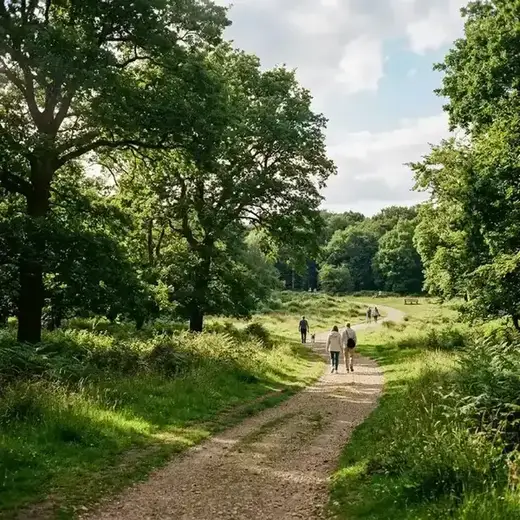
The most enduring attraction of Wimbledon is not a single sporting date but the freedom to step outside into green space. Wimbledon Common offers room to walk, run and pause, changing character with the seasons. There is a pleasure in visiting during a summer tournament, but it can feel even more personal on a crisp autumn afternoon when the paths are quieter. For people moving from denser parts of London, that everyday access is often the detail that stays with them after a viewing.
Not every Wimbledon address is equally close to the Common, and being near it can involve trade-offs in budget or station distance. Visit at several times of day. Consider whether the route would remain easy with children, a dog, a pushchair or a late train home. The point is not to buy a postcard scene; it is to understand whether the local landscape will be part of your real weekly routine.
Wimbledon Park and other ways to live locally
Wimbledon Park offers another version of the SW19 lifestyle: parkland, residential streets, shops and District line access. Parts of it place the tournament within easy reach while feeling quite different from the Village. Families may appreciate the park and conventional house layouts; commuters may focus on the station. Here, as everywhere, one road can differ from the next in noise, parking and housing stock.
A wider search can also include central Wimbledon, Wimbledon Chase and South Wimbledon. They do not all put you beside Centre Court, but they may offer a stronger match for a buyer's budget, preferred transport line or desired floor plan. The tournament is a useful introduction to the area, not a reason to ignore other neighbourhoods. For a fuller picture of the buying process, read our guide to buying a family house in Wimbledon. Compare routes to work, schools and shops before deciding which version of Wimbledon suits you.
Why an autumn search makes sense
The fortnight is over, but the next one already gives a potential buyer a useful planning horizon. Starting in autumn does not mean committing immediately. It means setting a realistic budget, understanding how different streets feel without the temporary tournament crowds, and seeing enough properties to recognise value when the right home appears. A buyer who waits until next summer to begin may still find a wonderful home, but will have less time to form an informed view before the seasonal attention returns.
Autumn is especially helpful for testing practical conditions. How bright are the rooms when the sun is lower? Is the walk from the station comfortable after work? Do the street and garden feel private when leaves begin to fall? What are weekend parking and traffic like in an ordinary month? A summer viewing can flatter a garden; a cooler-weather visit often reveals how a property will function for most of the year.
Make a shortlist based on your routine
Begin with your actual week. Map the journey to work, the school run if relevant, the grocery shop and the places you expect to use after 6pm. Decide how much of your budget needs to cover renovation, Stamp Duty Land Tax where applicable, moving costs and a contingency. Then separate must-haves from features that merely photograph well. A beautiful road close to the grounds should not outweigh a layout that fails the household's basic needs.
For a closer comparison of micro-locations, our guide to Wimbledon neighbourhoods for property buyers is a useful place to start. Use it as a framework rather than a league table: your best area depends on your own journey, preferred type of home and appetite for a project. Revisit shortlisted streets on foot at different hours instead of judging everything from a single weekend viewing.
Look at the home, not just the headline address
The tournament gives Wimbledon name recognition, but a house purchase still depends on the fundamentals. Check the roof, heating, windows, drainage and evidence of past alterations with a suitably qualified surveyor. Ask your conveyancer about title, planning permissions, building regulations, rights of way and any restrictions that affect intended work. For flats, investigate the lease term, service charges, management information and planned major works. These checks matter whether or not Centre Court is visible from the road.
It is tempting to treat a famous local landmark as evidence that an asking price must be justified. It is not. Ask how the price compares with recent genuinely similar sales and current competition. A seller may value an address for personal reasons, but the buyer must decide whether the property offers enough usable space, condition and convenience for the money. Neither a tennis connection nor a general London market trend can guarantee future resale value.
Be careful with rental and investment assumptions
The Championships bring visitors to the area, so some buyers naturally wonder about short stays. Do not build a purchase budget on assumed tournament rental income. The permission to let a property may depend on the lease, mortgage, insurance, planning rules, tax position and any building or local restrictions. Demand, permissible use and achievable rates can vary, and running short lets involves work and risk. Take independent professional advice before relying on that possibility.
For most owner-occupiers, the stronger case for living in Wimbledon is simpler: a home that supports the life they want throughout the year. If you would enjoy the tournament but would also enjoy the area without it, that is a sounder basis for a search than a speculative fortnight of income. The tennis is an extraordinary bonus to a well-chosen home, not a substitute for due diligence.
What to do between now and next summer
First, spend time in the area without viewing anything. Walk from Wimbledon station to the Village, take a different route past the Common, and explore Wimbledon Park and surrounding residential streets. Notice where you naturally stop and which journeys feel easy. Then agree your borrowing and overall moving budget with the appropriate adviser. This lets you act when a suitable home appears without making a rushed decision.
Next, create a shortlist of property types rather than a rigid list of famous roads. A well-arranged house on a quieter street may be preferable to a more prestigious address with compromised space. View at different times, review the property's documentation and arrange a survey suited to its age and condition. If school access matters, check current admissions rules directly with the relevant authorities; a nearby home does not guarantee a place.
Finally, allow the legal process enough time. Searches, mortgage offers, leasehold enquiries and chains can all affect the timetable. Starting an autumn search is not a promise to complete before a particular sporting event. It simply gives you the chance to make the next move deliberately rather than responding to a deadline invented by the calendar.
The lasting appeal of a Wimbledon address
The 2026 Championships brought exceptional crowds, sporting drama and a global spotlight back to SW19. Residents saw a familiar place transformed for a fortnight, then watched it settle into its usual rhythm. That contrast is part of Wimbledon's character. Few London neighbourhoods can host an event of such scale and still offer an ordinary weekday shaped by local cafés, connected streets and generous outdoor space.
For buyers, the best time to understand that character may be now, after the final point has been played. Autumn gives you a clearer view of what it means to live here in every season, while leaving time to prepare before another Wimbledon summer. Choose the right home for your daily life and the next Championships can be something to enjoy from a neighbourhood you already know.
Share this article